

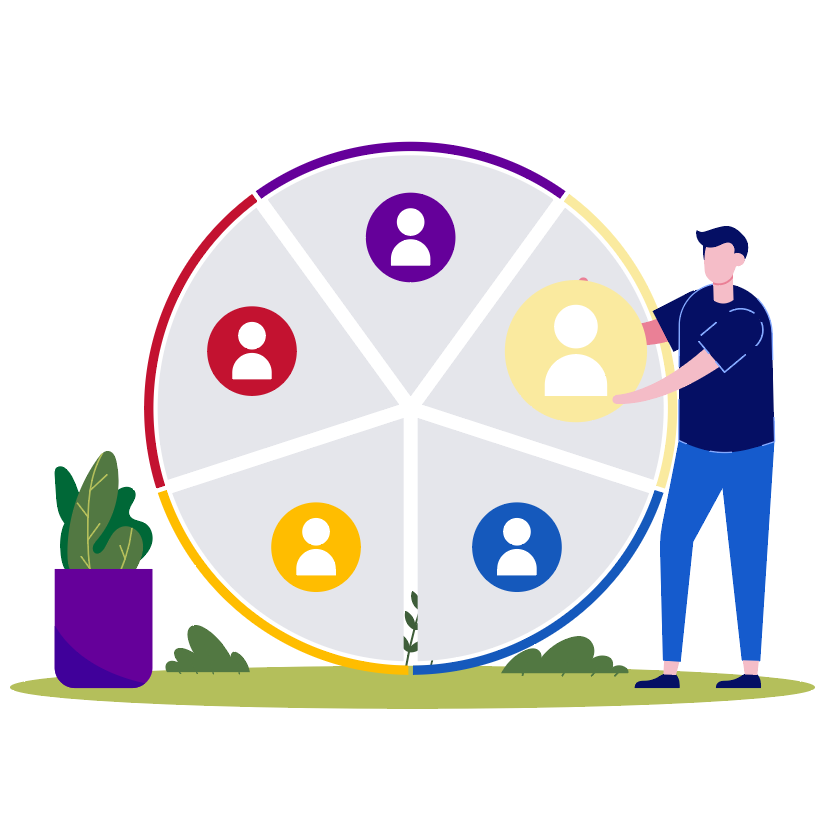
Not every prospect needs the same message.
A manufacturer may have different needs than a professional services firm. A small business may have different priorities than a large corporation. And a company in California may respond differently to an offer designed for businesses in New York.
That is why segmentation can be an important part of a successful marketing strategy.
Instead of treating an entire business database as one large audience, segmentation allows you to divide prospects into smaller groups based on characteristics that matter to your business.
Here are several ways to get started.
Segment by Industry
Industry is one of the most common ways to divide a business audience.
For example, a company that sells commercial cleaning services might create separate audiences for:
- Medical offices
- Restaurants
- Retail businesses
- Office buildings
- Industrial facilities
The same basic service may appeal to all of these groups, but the reasons they need it—and the way you communicate the value—may be different.
Creating industry-specific segments can make it easier to tailor your messaging.
Segment by Geography
Location can also help you organize your prospects.
Depending on your business, you might divide your audience by:
- State
- City
- Country
- ZIP code
- Metro Area
- Sales Territory
Geographic segmentation can be especially useful for businesses with local or regional sales teams.
It can also help businesses test new markets. Instead of launching a campaign across the entire country, you might begin with a few selected markets and compare the results.
Segment by Company Size
A company’s size can influence its needs, budget and purchasing process.
Employee size and estimated sales volume can be useful criteria for separating small businesses from larger organizations.
For example, a company selling a high-cost business service may want to focus on organizations with a certain employee count or revenue range.
Another business may specifically specialize in helping small businesses and want to build an audience around that segment.
Segment by Decision-Maker
Knowing which businesses you want to reach is helpful. Knowing who you want to reach within those businesses can make your targeting even more specific.
Consider the job functions involved in purchasing your product or service.
Depending on your industry, your audience might include:
- Business owners
- CEOs
- CFOs
- Marketing executives
- Operations managers
- IT directors
- Human resource professionals
Building your audience around relevant titles can help your outreach reach the people most closely connected to the purchasing decision.
Combine Multiple Criteria
The real power of segmentation often comes from combining several characteristics.
Instead of targeting “businesses,” your audience might be:
Manufacturing companies + Ohio + 50–250 employees
Or:
Medical offices + Southern California + specific executive titles
The more clearly you define your audience, the more specific your marketing strategy can become.
DatabaseUSA’s business data can be selected using characteristics including industry, geography, employee size, sales volume and executive information.
Create Different Messages for Different Segments
Once you have divided your prospects into meaningful groups, consider whether your messaging should change with them.
A marketing message aimed at a small business owner may focus on simplicity and affordability.
A message aimed at a larger company may focus on scalability, efficiency or managing multiple locations.
You don’t necessarily need a completely different campaign for every segment. Even small changes in the examples, benefits or language you use can make your message more relevant.
Keep Your Segments Manageable
It can be tempting to create dozens of highly specific audiences.
But segmentation is most useful when it helps your team make better decisions—not when it makes your marketing impossible to manage.
Start with the characteristics that genuinely matter to your business. You can always create more detailed segments as you learn what works.
Better Targeting Starts With Better Data
The goal of segmentation isn’t simply to create smaller lists.
It is to create more meaningful audiences.
When your business data includes useful information about industries, locations, company size and decision-makers, your marketing team has more options for creating targeted campaigns.
Whether you’re planning end-of-year outreach or building your marketing strategy for next year, taking the time to define your audiences can help you make better use of the data you already have.
DatabaseUSA provides business data and customized targeting options to help businesses identify specific types of companies and contacts based on their marketing needs.
Start with the customers you understand best, identify the characteristics they have in common and use those insights to build your next prospect audience.
Try 100 Leads Free from DatabaseUSA.
Complete the form or call us at 877-831-0101 for more information about our Database Services.
Call us at (877) 831-0101 for immediate service
*Limit one free sample file per customer
All information collected from this form will not be shared, sold or provided to any third party. Terms & Conditions and Privacy Policy.